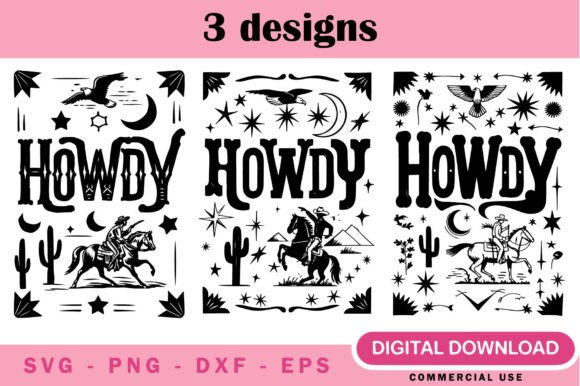
★★★☆☆3.7(397 reviews)
Howdy Vintage Cowboy SVG Review for Real Embroidery Projects
Real-Life Embroidery Use: What Works and What Doesn’t
For sweatshirt embroidery, the design looked great on a soft French terry fabric. The texture of the material didn’t interfere much with the stitching, and the overall presentation was clean and professional. On a tote bag, the same design added just the right amount of rustic appeal, especially when paired with a leather patch or wooden button. If you're planning to use this in commercial embroidery for products like caps or curved surfaces, you’ll need to adjust the placement carefully. The design might require some resizing or repositioning to fit properly without stretching or warping. Also, watch out for areas with dense stitch work—those can cause puckering if the stabilizer isn’t strong enough or the tension isn’t dialed in correctly.Where to Use With Caution
- Small hoop sizes: If you’re working on tiny embroidery patches or delicate items like baby onesies, the intricate parts may get lost unless you simplify the design.
- Textured fabrics: Fabrics like denim or flannel can affect the crispness of the satin-stitched letters. Test on scraps before committing.
- Thin or stretchy materials: These can cause distortion in the finer details. Consider reinforcing with extra stabilizer or adjusting the stitch density.
- Dark backgrounds: Unless you have access to white or metallic threads, the design might struggle to pop against darker substrates.
- Products needing frequent washing: The design uses several thread colors, so ensure they are colorfast and suitable for long-term wear.
Handmade Presentation and Brand Consistency
It’s also highly adaptable for different seasons or events. Think of it as a holiday embroidery option for Fourth of July or a fall harvest tote. Just change the colors or add seasonal elements around it, and it becomes a fresh design asset every time.Designer Notes: Practical Tips Before You Stitch
Before using Howdy Vintage Cowboy SVG in your next embroidery project, here are a few steps I recommend:- Test on scrap fabric: Always do a test run. Especially with designs that have varied stitch types and thread color changes.
- Check thread color contrast: Make sure the chosen colors will stand out clearly against your fabric. Don’t rely solely on the default palette.
- Review stitch density: Areas with heavy fill stitches might need lessening to avoid bulk, particularly on thinner materials.
- Confirm hoop size: If you're making a larger piece like a pillow cover or sign, check whether the SVG requires a bigger hoop than your usual setup.
- Inspect small details: The design has a few fine elements that could break during transfer or stitching. Zoom in and verify all parts are intact.
- Test in black and white: See how the design looks in grayscale to evaluate form and structure before finalizing thread choices.
- Compare light and dark fabric backgrounds: This helps determine if the design needs enhancements or simplifications depending on the base material.
- Use proper stabilizer: Especially important for stretchy or thin fabrics. Tear-away alone might not be enough for more complex layouts.
- Confirm licensing before selling: As a digital product seller or commercial embroiderer, always double-check the license to ensure you can sell finished items or digital files based on this design.
⬇️ Download Free
Free download · No sign-up required
🔗 You Might Also Like
T-Shirt Designs
Embroidery designs are more than just pixels on a screen—they need to translate ...
T-Shirt Designs
Design Notes for Best Results Test on scrap fabric first: Especially if you plan...
T-Shirt Designs
As an experienced embroidery designer and product reviewer, I often find myself ...
T-Shirt Designs
Embroidery design evaluation is a critical step in any project, whether you're c...
T-Shirt Designs
As a designer and embroidery product reviewer with years of experience in the cr...
