Howdy Easter Western Bunny Cowboy SVG Review
As a designer who spends half my life staring at stitch charts and the other half trying to explain to clients why their logo won’t work in three colors, I approach every new digital asset with a healthy dose of skepticism. The market is flooded with clip art that looks great on screen but turns into a muddy mess when stitched. Recently, I pulled Howdy Easter Western Bunny Cowboy SVG off the shelf to see if it actually holds up in a real-world embroidery project. I didn’t just want to look at the vector lines; I wanted to know how it would perform on a sweatshirt, whether it would sell at a craft fair, and if it would survive a trip through the wash.
First Impressions: Mood and Visual Personality
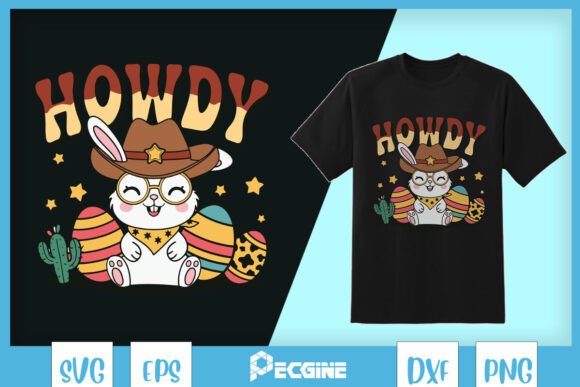
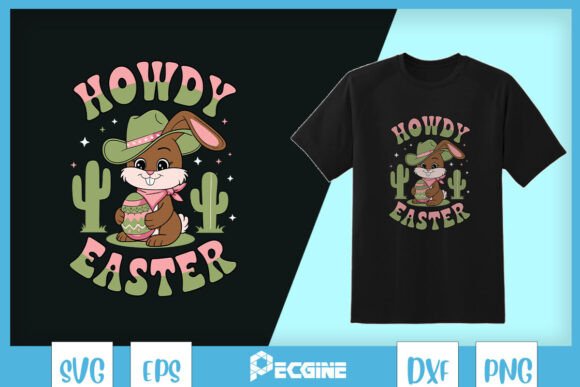
The moment you load this file into your design software, the theme is unmistakable. It captures that specific intersection of springtime whimsy and rustic charm that defines the "Western Easter" aesthetic. The character itself—a bunny donning cowboy gear—feels playful without being overly childish. For an embroidery designer, the immediate question is always about balance. Does the design have enough visual weight to command attention, or does it feel sparse?
This design strikes a solid middle ground. The layout is clean, which is crucial for machine embroidery. Unlike complex illustrations that rely on gradients or subtle shading, this graphic relies on strong shapes and clear silhouettes. This makes it inherently more forgiving during the digitizing process. Whether you are using it as an applique design or stitching it out directly, the distinct elements (the hat, the ears, the text) separate well from one another. It feels like a piece built for custom apparel rather than a decorative accent that might get lost in the fabric weave.
Real-World Application: From Screen to Stitch
I decided to test this design on a few different substrates to see where it truly shines. The primary use case here is clearly T-Shirt Designs and casual wear. When I mocked up the Howdy Easter Western Bunny Cowboy SVG on a heather grey crewneck, the contrast was excellent. The western theme pairs naturally with denim jackets, flannel shirts, and canvas totes.
However, the versatility extends beyond basic tees. Because the design is pre-sized and includes high-resolution PNGs with transparent backgrounds, it translates beautifully to smaller items. I envision this working exceptionally well for:
- Baby Embroidery: On a muslin burp cloth or a tiny onesie, the cute factor is amplified. Parents love personalized gifts that aren’t purely generic.
- Holiday Embroidery: This hits the sweet spot between Easter and Spring. It’s timely without being strictly religious, making it safe for broad retail audiences.
- Accessories: A tote bag design featuring this bunny adds a touch of personality to grocery runs or beach days. It also works as a statement piece on a kitchen towel or a tea towel set.
For the Etsy seller or small shop product owner, this design offers high perceived value. It looks like a boutique item rather than mass-produced merchandise. The western motif taps into a loyal customer base that appreciates rustic, handmade aesthetics. When customers see a finished product that aligns so well with current trends, trust increases, and buyer engagement goes up.
Technical Performance and Stitch Clarity
When evaluating an embroidery file, we have to talk about density and detail. This design avoids the common pitfall of overcrowding. By keeping the details relatively bold, it ensures that the stitch density remains manageable. This is vital for preventing fabric puckering, especially on lighter materials.
If you are planning to use satin stitches for the outlines or lettering, ensure your tension is calibrated correctly. The curves in the cowboy hat brim and the bunny ears require smooth transitions to avoid thread breaks. However, because the original vector is clean, scaling it up or down within reason shouldn’t distort the critical details. The inclusion of DXF files is a bonus for those who need to cut applique fabrics or vinyl layers, adding to its utility as a comprehensive design assets package.
The visual appeal of the final product depends heavily on your choice of thread colors. I recommend sticking to classic western palettes: denim blues, earthy browns, cream whites, and perhaps a pop of pastel yellow or pink for the bunny accents. Avoid overly neon threads, as they can clash with the rustic vibe. The goal is a finished product that looks cohesive and professional, not chaotic.
Where to Exercise Caution
No design is perfect for every surface. While this machine embroidery design is versatile, there are specific scenarios where you should proceed with caution.
- Small Hoop Sizes: If you attempt to stitch this on a very small area, such as a child’s sock or a miniature patch, the details may become indistinct. Always check the minimum recommended hoop size before committing to the production run.
- Textured and Stretchy Fabrics: Knits, fleece, and highly textured weaves can hide the definition of the stitches. On stretchy fabrics, the design may distort if you don’t use the correct stabilizer. A tear-away or cut-away stabilizer is non-negotiable here to maintain the integrity of the shape.
- Dense Stitch Areas: While the design isn’t overly dense, large fill areas can add significant weight. On delicate fabrics like silk or thin rayon, this weight could cause sagging. Stick to sturdier cottons, denims, or blends for the best results.
- Curved Surfaces: Applying this to a curved cap requires careful hooping techniques. If the curvature is too extreme, the flat nature of the digital file might result in uneven tension across the hat’s front panel.
Practical Designer Notes for Success
Before you rush to list this as a commercial embroidery item, follow these practical steps to ensure quality control:
- Test on Scrap Fabric: Never go straight to the final garment. Run a test stitch on the exact same fabric type to check for color bleeding, puckering, or registration issues.
- Review in Black and White: Convert your mockup to grayscale. This helps you assess the contrast levels. If the design loses definition in black and white, it will likely struggle in color embroidery.
- Inspect Small Details: Zoom in on the smallest elements. Are the eyes distinct? Is the text legible? If any part looks fuzzy, consider simplifying the digitizing or adjusting the stitch type.
- Confirm Licensing: As a craft business owner, your livelihood depends on legal compliance. Verify the license terms associated with the Howdy Easter Western Bunny Cowboy SVG. Ensure you are permitted to sell physical items made from this design. Some licenses restrict commercial use or limit the number of units you can produce.
- Use Proper Stabilizer: Match your stabilizer to your fabric. Heavy-duty cut-away for knits, light tear-away for wovens. This single step often separates amateur work from professional-grade output.
Final Verdict
The Howdy Easter Western Bunny Cowboy SVG is a robust, well-conceived design that fits seamlessly into the world of handmade products and personalized gifts. It offers the right amount of detail to be interesting while remaining simple enough for reliable machine execution. For digital product sellers and apparel decorators, it provides a ready-to-use solution that requires minimal tweaking.
It excels in creating a sense of fun and nostalgia, making it a strong candidate for holiday embroidery collections. Whether you are designing for a baby shower, a spring craft fair, or a year-round western-themed boutique, this design delivers on both aesthetic and functional fronts. Just remember to respect the limitations of fabric and hoop size, and always prioritize testing. When done right, this little cowboy bunny can be the star of your next collection.